
Case Study
Crisalix
Brief and problem statement
Crisalix is the world’s leading tech company in the field of 3D aesthetic simulation. This case study focuses on the creation of a feature that allows doctors to record the before and after of their patient’s surgeries. There is currently no such feature for doctors and it would be extremely important for them to have a history of their patients in order to have an overall clinical overview and results.
Goals and requirements
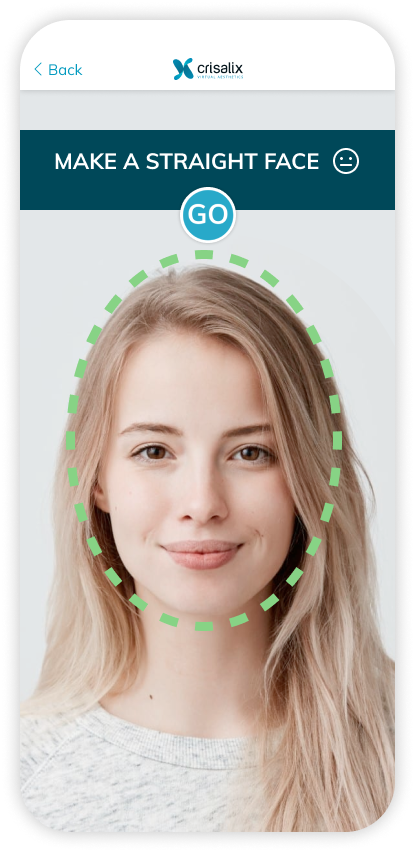
The goal of this project is to create a UX design for a feature that allows the doctors to record their patients face pre and post facial treatment. The app would request to record a smiling face or a sad face, for example, in order to demonstrate the improvements of the treatments with these expressions. The feature would then synchronize both videos and allow the doctor to accurately show the results to the patient.
The project
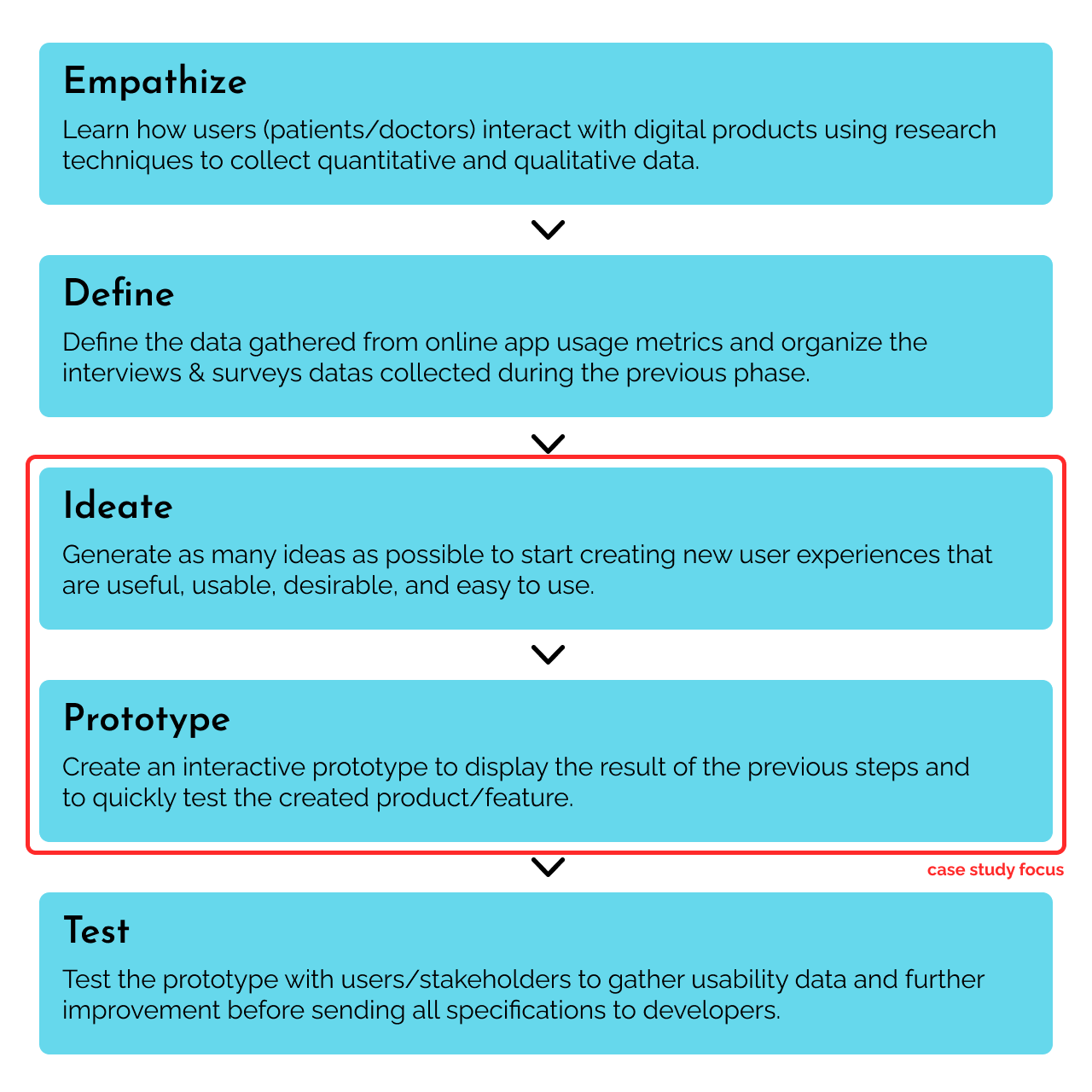
For this project I would have adopted the design thinking methodology. Unfortunately I was not being supported by the company’s metrics and business requirements, which are very important for the choice of design.
I focus on the steps of ideation and prototyping following some ideas collected during the research phase carried out online and on my personal experience.
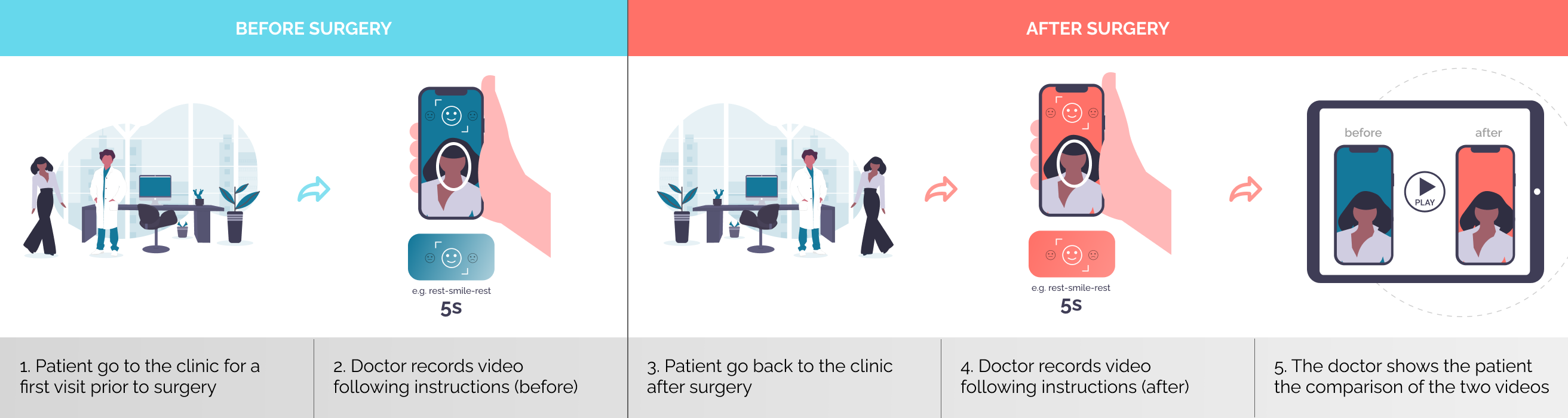
I define a hypothetical context and flow of interactions between the doctor, the patient, and the digital artifacts.
I imagine 3 different “user experiences” describing the positive and negative aspects.
The following storyboard describes the flow between the two users and the possible interactions while using the function.
Idea 1
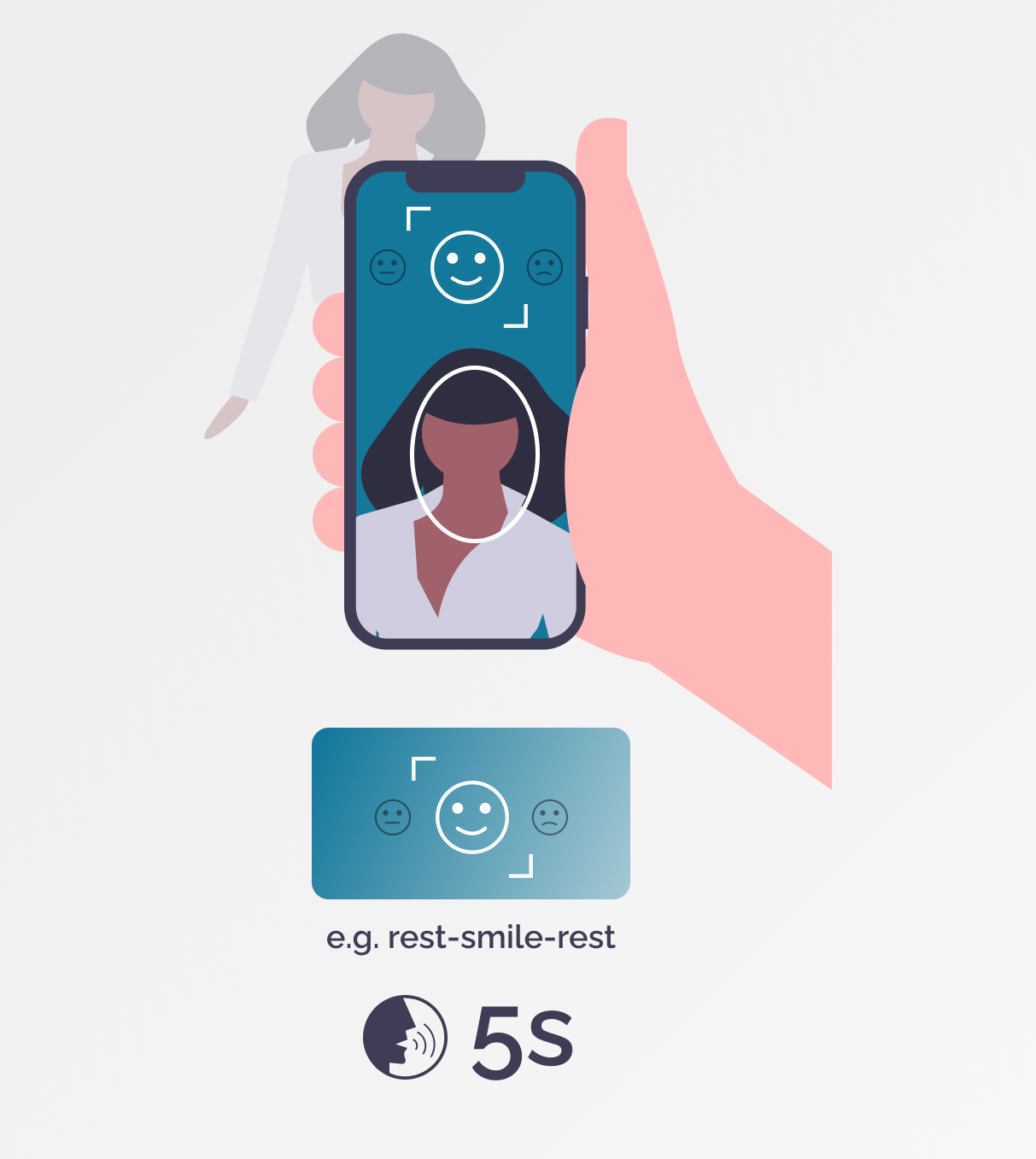
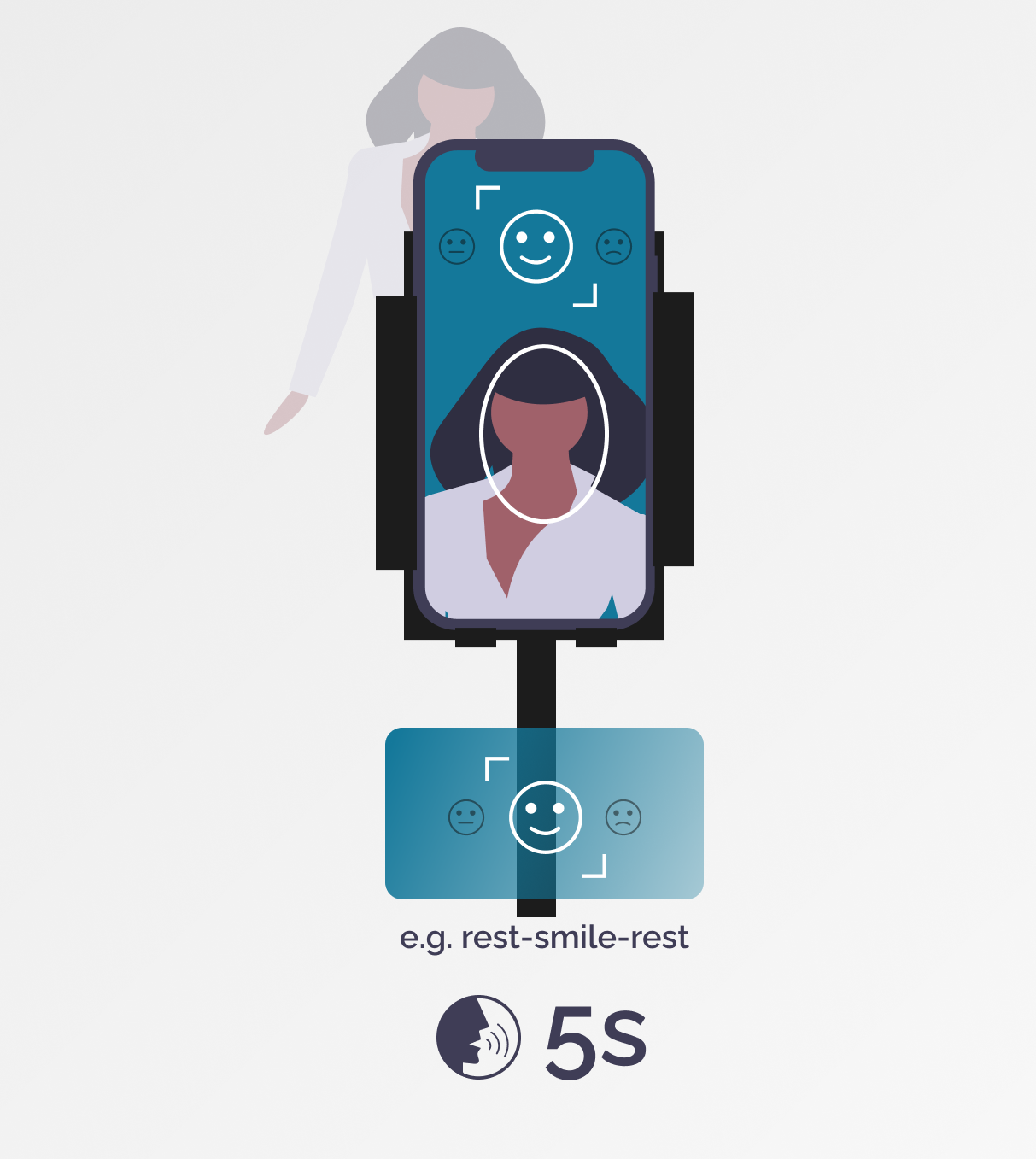
Doctor in front of the patient holding the device in his hands framing the patient’s face within registration area (ellipse) while a voice guides the patient through the various pauses and facial expressions (rest-smile-rest).
Pros:
Freedom of movement. The doctor can carry the device everywhere and can sit the patient close to the best light source.
Cons:
• Risk of hand movement during video recording
• The patient listens to instructions without having visual control over the screen.
Idea 2
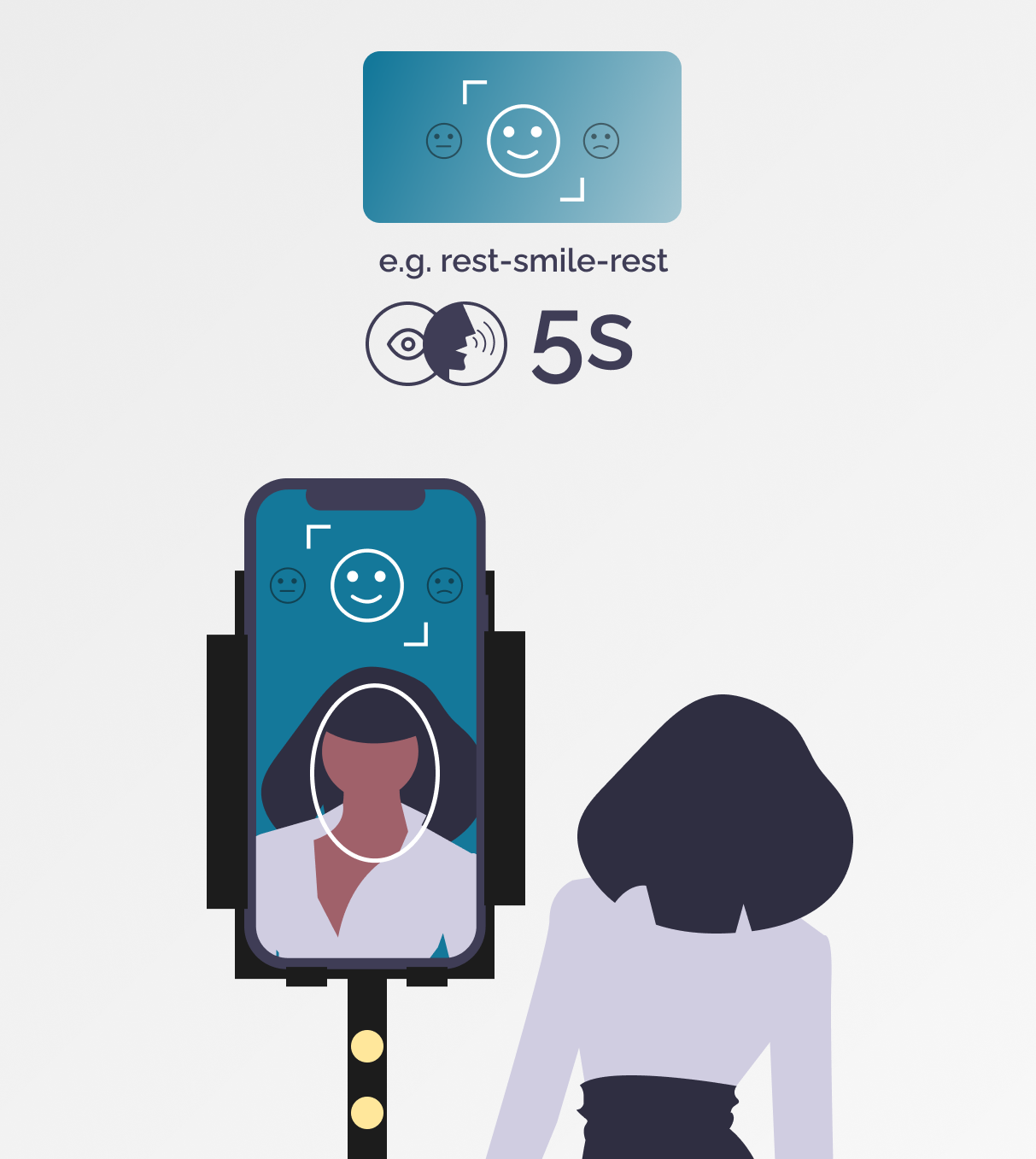
Doctor places the tripod with the device in front of the patient, framing the patient with the back camera. Then a voice guides the patient through the various pauses and facial expressions (rest- smile-rest).
Pros:
Higher quality video without movement disorders from the doctor.
Cons:
• Tripod size
• Possible logistics problems (e.g. small office, lighting, doctor often changes clinics/studios)
• The patient listens to instructions without having a visual check on the screen.
Idea 3 – Possible solution
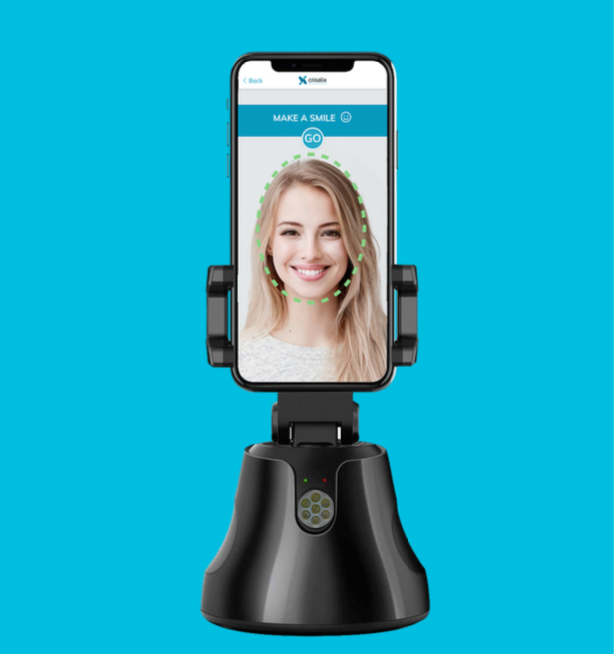
Doctor places the tripod with the device in front of the patient, framing the patient with the front camera. If necessary he switches on the integrated tripod light. An automatic voice guides the patient through the various pauses and facial expressions (rest-smile) showing on the screen a timer that runs for seconds during the recording of expressions.
Pros:
• Higher video quality without movement interference by the doctor
• User guidance through audio and screen
• Tripod with integrated light easy to carry and use for mobile/tablet devices.
Cons:
• Customize Tripod productions
• Shipping cost to doctors around the world.
Prototype process
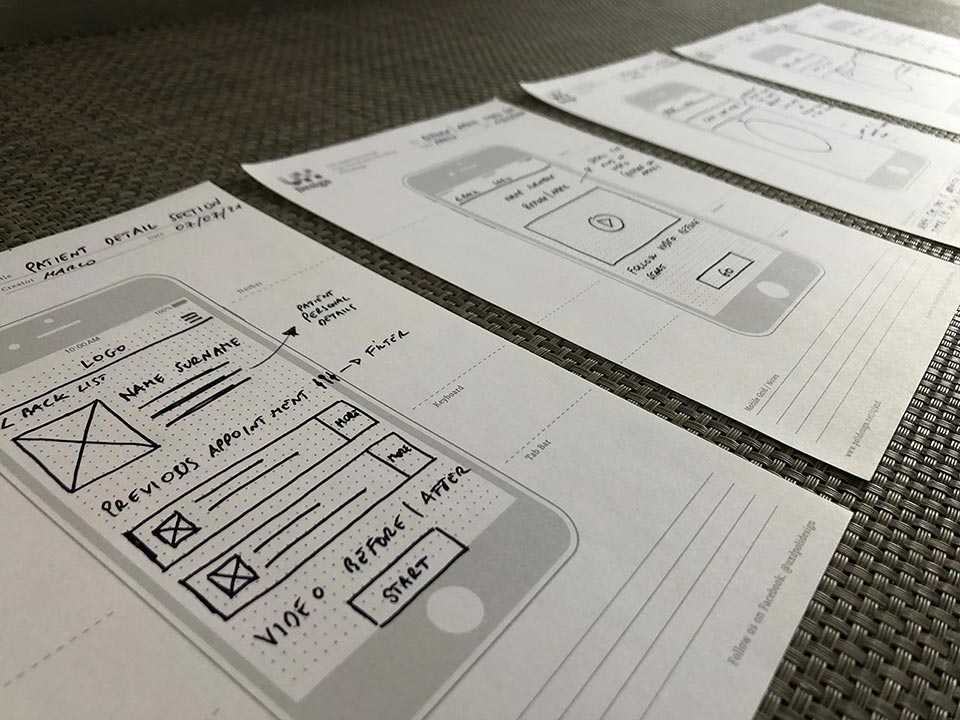
Sketch & wireframes
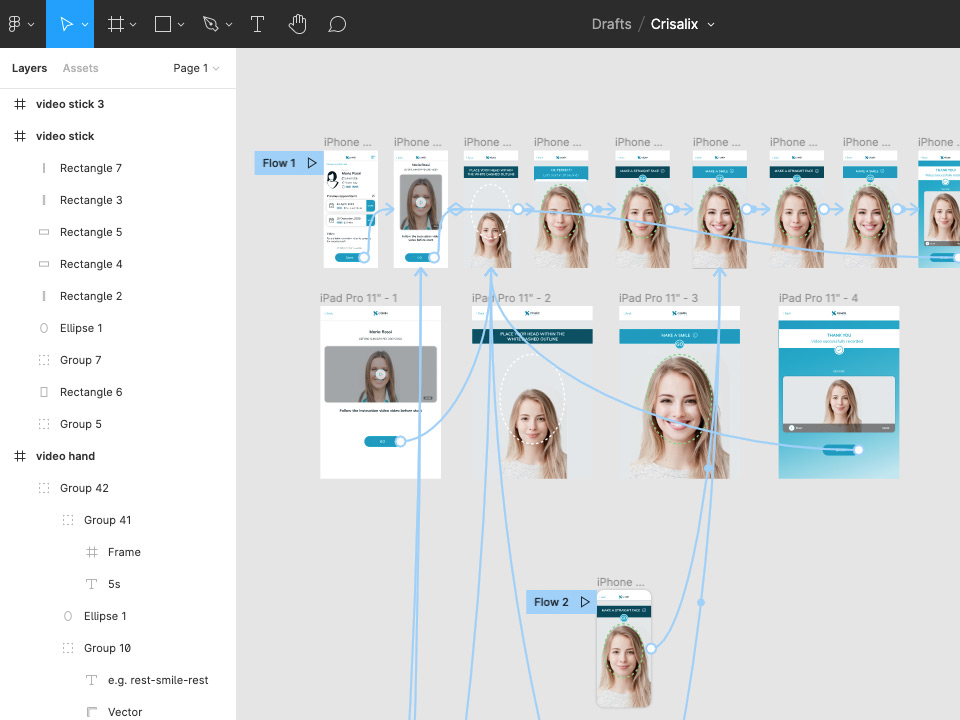
Screens & interactions
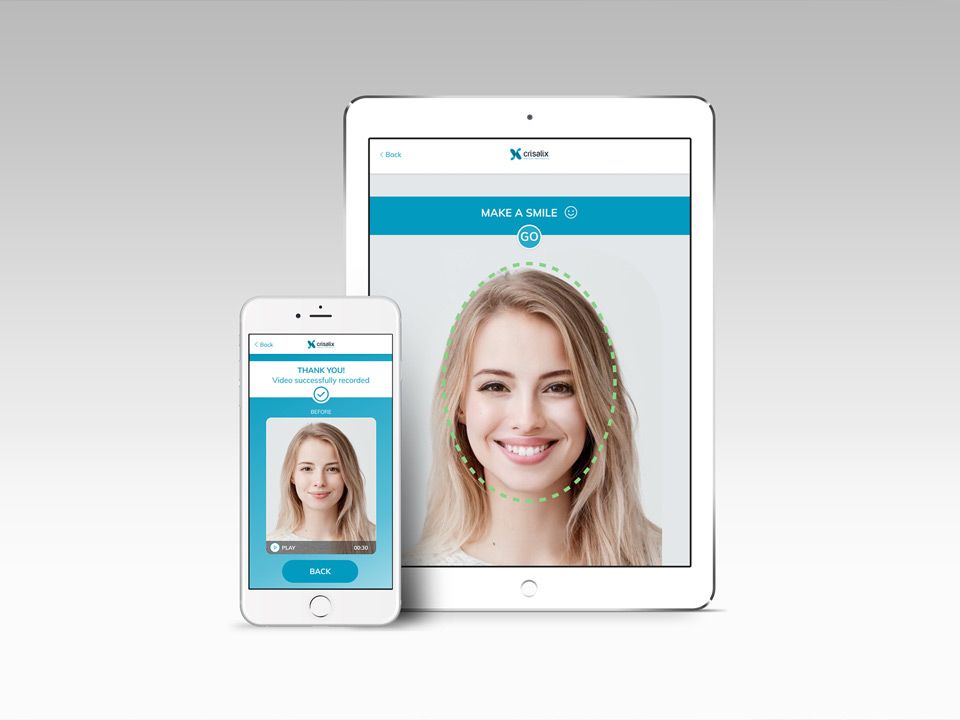
High-fidelity prototype
The final design & conclusions
The creation of this feature is specifically for doctors where they can record the face of their patients focusing on the area of the next surgery.
There are many factors to considered and it would be helpful to talk to interested users to create something that is easy to use and understandable following their needs.
A user test phase is very important to test the new experience and interfaces to further improve the digital solution before sending the specifications to the developers.
Being a feature that uses the “live camera” we should create a prototype with an animated png filter that overlaps the camera (e.g. instagram filter) to see how the user reacts during voice and visual commands (wizard of oz).
Without data I relied on my mental pattern which is not right because I am not the end user. Therefore I would like to point out that my opinion and the creation of this feature may not be completely appropriate for Crisalix users. Opinions remain opinions while with metrics we can measure our ideas and make design decisions to improve the solution and follow user needs in more detail.
MY ROLE
Research
Sketching
Wireframing
Screen Flows
Visual Design
Interaction Design
PLATFORM
Mobile App
Tablet App
YEAR
2021